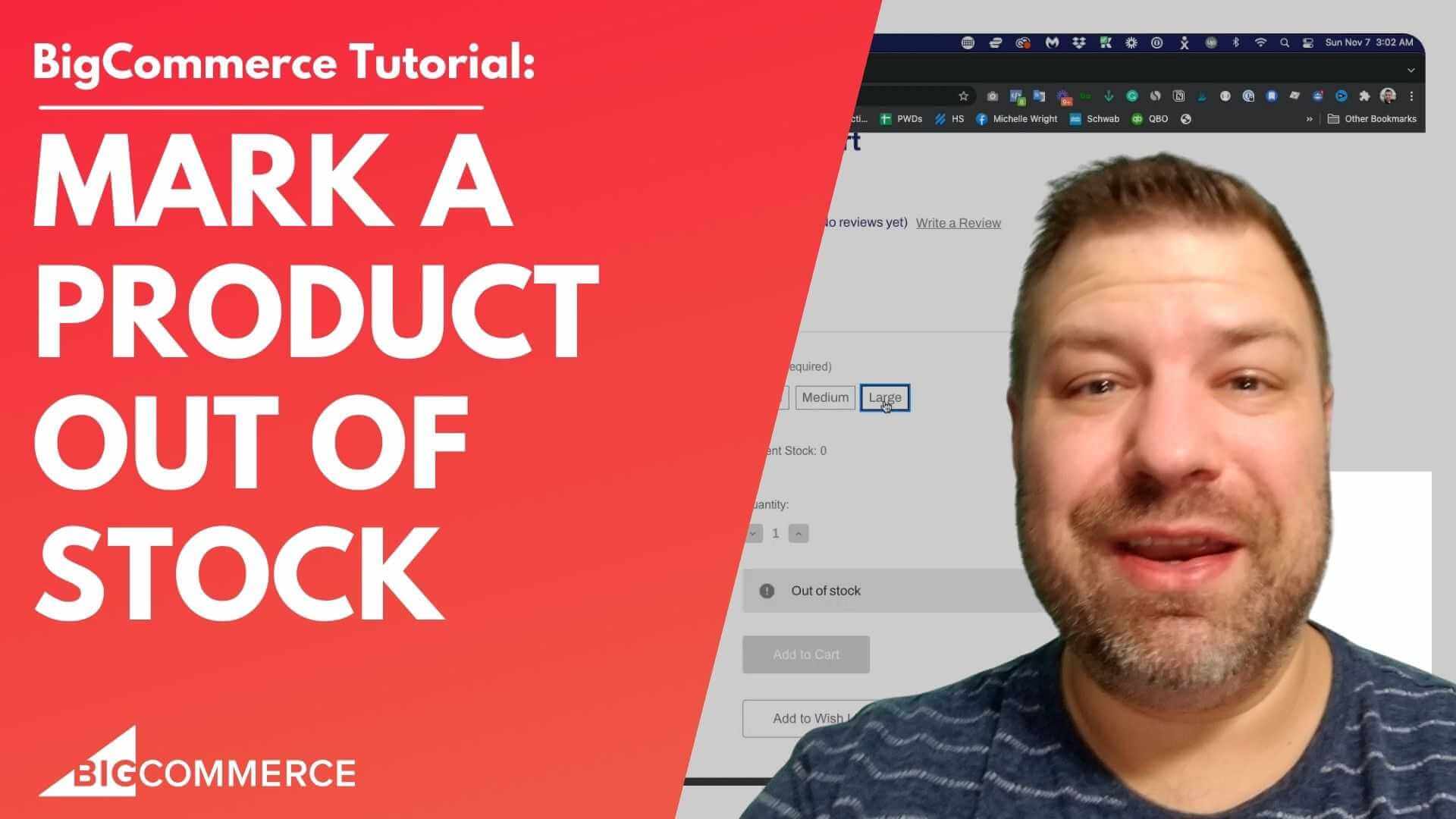
Managing your product inventory efficiently is key to running a successful ecommerce store. Whether you’re offering single products or variants, ensuring your products are correctly marked as out of stock can help improve the customer experience and avoid frustration.
In this video, I walk you through step-by-step instructions on how to mark a product as out of stock on BigCommerce, no matter if you’re dealing with single items or products with multiple variants. By the end of the video, you’ll know exactly how to keep your store’s inventory accurate, visible, and up to date.
Watch the video below to learn:
- How to track product inventory in BigCommerce.
- How to display low stock warnings.
- The best practices for handling inventory when your product has variants like size or color.
- How to hide or display out-of-stock options.
- What advanced settings you can use to enhance how out-of-stock products are handled.
Video Summary:
Here’s a quick summary of the key points covered in the video. These timestamps will help you navigate directly to the parts most relevant to you:
- (00:31): Begin by tracking inventory in BigCommerce, as products can’t show as out of stock unless inventory is tracked.
- (01:46): For simple products, setting inventory to zero will automatically mark the product as out of stock, hiding the “Add to Cart” button.
- (02:26): When working with product variants (e.g., sizes or colors), you need to track inventory at the variant level to mark specific variants as out of stock.
- (03:44): Advanced inventory settings allow you to choose whether to mark out-of-stock variants or completely hide unavailable options from customers.
- (05:31): Learn how to configure low stock warnings and stock visibility to alert customers when stock levels are below a set threshold.
If you’re looking for a simple way to improve your store’s inventory management, watch the video and follow along. Don’t forget to subscribe for more ecommerce tips, and feel free to leave any questions in the comments below!
Full Transcript
(00:01)
Hey there! Are you trying to figure out how to mark your products as out of stock on BigCommerce? You’re in luck! In this video, I’m going to show you exactly how to do that.
Before we get started, my name is Kal. I’m an ecommerce developer and store owner just like you. I also run the Ecommerce Growth private community for store owners. I’ll leave a link afterwards if you’d like to join—it’s completely free. I post more ecommerce videos every week, so if you find this one useful, subscribe and hit the bell!
(00:31)
Alright, let’s talk about showing inventory as out of stock. Let me share my screen. Here’s a product, Test Shirt Dollar. The first thing we need to do is track inventory in BigCommerce.
You can’t mark a product as out of stock if there’s no stock being recorded, right? So, once we enable “Track Inventory,” we can set how many units we have. Let’s say we have 15 units in stock and set the low stock threshold to 10. This means when the quantity gets down to 10, it will be considered low stock.
(01:08)
Right now, we have 15 units, and low stock is set to 10. We’re also tracking inventory at the variant level. But if we come back to the front end, there’s no change yet because it’s not out of stock.
Now, if we set the quantity to zero, we can go back to the front end, and it will be marked as out of stock. This is how it works for a simple product—either you have stock or you don’t. If you don’t, it’ll display as “Out of Stock” and hide the “Add to Cart” button.
(01:46)
But what if your product has variants? Let’s add a variant like size and choose options like small, medium, and large. After saving, there’s no real change on the front end. Why is that?
Well, even though we’ve created child SKUs, the system is still tracking inventory at the product level, not the variant level. Right now, it’s saying that the entire Test Shirt product has zero units, rather than tracking stock individually for small, medium, and large.
(02:26)
To fix this, we need to track inventory at the variant level. After doing that, we can add stock quantities for each variant. Let’s say we have some units in stock for small and medium, but large is out of stock.
Now, if we go back to the front end, you’ll see that large is marked as out of stock. But until someone selects large, it might as well be in stock. So, it’s “kind of” marked as out of stock, but it’s not very obvious.
(03:03)
If you want something more obvious, let me show you the secret sauce! Go to Advanced Settings, then Inventory. Here’s where things can get tricky—it’s hidden under Advanced Settings, but this is where you can set specific inventory behaviors.
(03:44)
You’ll see an option for “When an option is out of stock.” By default, it doesn’t do anything. But you can change it to “Mark the option as out of stock.” After saving that, we can go back to the front end and refresh the page. Now, you’ll see that the large size is crossed out and marked as out of stock. It also disables the cart for that option.
(04:54)
Alternatively, you can also choose to hide the option altogether. If you save that, you’ll notice that the large size is no longer visible on the product page—it’s not marked as out of stock, but it’s hidden, so it won’t cause any issues.
(05:31)
Another useful feature is showing low stock levels. If you’re not tracking inventory by variant, you can enable Show Low Stock. For example, if we set stock to 5 and the low stock threshold to 10, BigCommerce can show a low stock message on the front end.
In the Inventory Settings, there’s an option for “Only show stock levels when stock is low” or “Show stock levels all the time.” This setting works at the product level.
(06:09)
These are your default options for marking products as out of stock. If you found this helpful, hit the like button and be sure to join our community of store owners at join.ecommercegrowth.com.
Keep in mind that what I’ve shown you here is just the default functionality. If you need more advanced features, like customizing the output with JavaScript, feel free to reach out to Epic Design Labs for development help. We can discuss your needs and figure out a solution.
(07:15)
I’m always looking for new content ideas, so if you have any questions or if I didn’t cover something in this video, leave me a comment below. Your question might end up being the topic of my next video. Thanks so much for watching, and I’ll see you next time!

Related Resources
View All →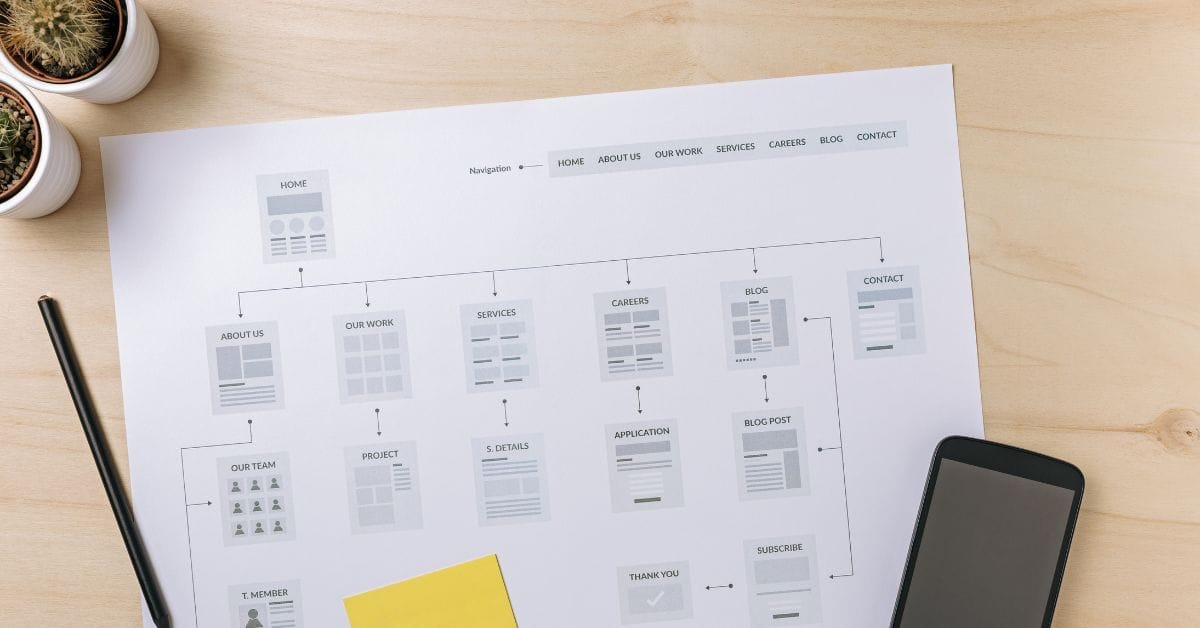
Where is the Sitemap on BigCommerce?
Are you trying to find your sitemap on BigCommerce but aren’t sure where to look? Whether you’re submitting your sitemap \[…\]
What size should your hero image be
In the vast realm of e-commerce, mobile images and web desChoosing the right size for your hero image is crucial \[…\]

What is the BigCommerce API
If you’ve been working in ecommerce, especially with BigCommerce, you’ve probably heard the term “API” thrown around. But what exactly \[…\]
What is BigCommerce Stencil?
If you are still using the BigCommerce Blueprint theme framework, it’s high time that you switched over to their new \[…\]
Welcome to Epic Page Builder Widgets
If you’re running an ecommerce store on BigCommerce, streamlining your page design without the constant need for developers is crucial. \[…\]
Stencil Local Development – Walkthrough
If you’re looking to develop on BigCommerce, using Stencil Local Development is a game-changer. In this video, I walk you \[…\]

Remove Powered by BigCommerce Link
If you’re running a BigCommerce store and want to remove the Powered by BigCommerce link at the bottom of your \[…\]
Page Builder Fields In Raw HTML BigCommerce Page Template
Are you trying to create custom landing pages on BigCommerce but struggling with how to use Page Builder fields in \[…\]
Most Popular Products on BigCommerce
Understanding Top Sellers and Customizing Your Store If you’re wondering how to display BigCommerce’s most popular products feed on your \[…\]