For e-commerce businesses operating on platforms likein Shopify and BigCommerce, managing inventory and streamlining fulfillment processes become increasingly challenging as order volume grows. When native platform tools no longer meet these expanding needs, merchants begin searching for the best inventory management software to enhance their operational efficiency.
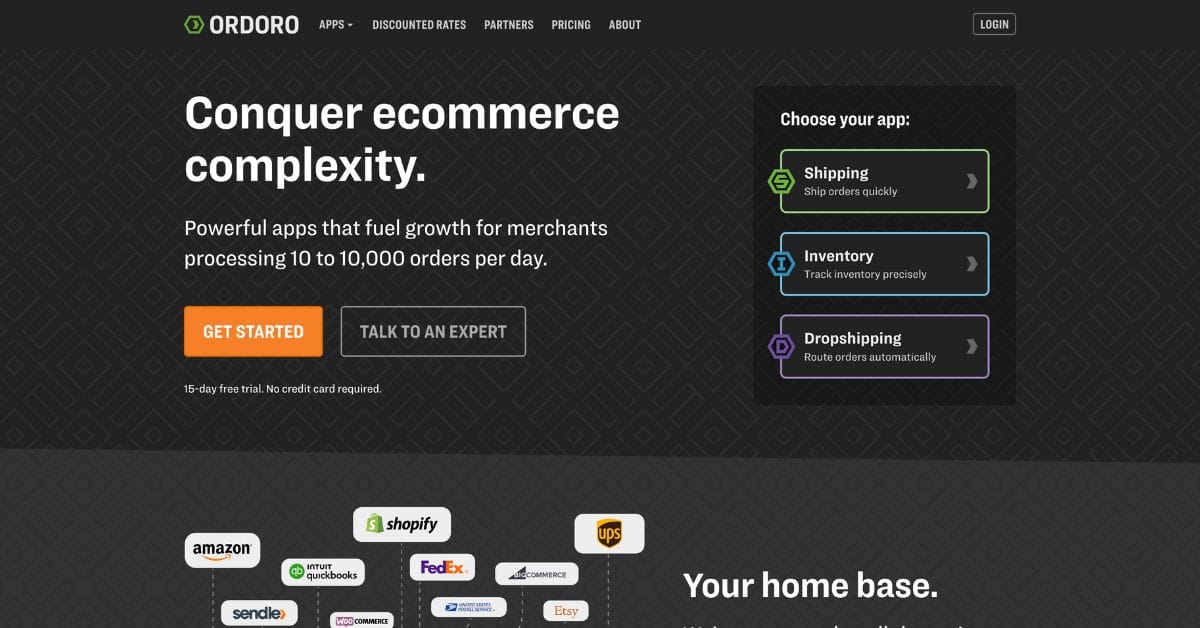
Ordoro positions itself as a dual-purpose platform that bridges the gap between inventory management and shipping operations for online retailers. Unlike systems that focus primarily on inventory control, Ordoro gives equal weight to fulfillment processes, making it a distinctive option for e-commerce businesses seeking to optimize both aspects of their operations. This review examines how effectively Ordoro serves Shopify and BigCommerce store owners looking to upgrade their inventory and shipping capabilities.
Company Background
Ordoro was founded in 2010 and is headquartered in Austin, Texas. The company has maintained a consistent focus on serving small to mid-sized e-commerce businesses with an integrated approach to inventory and shipping management.
Unlike many inventory management systems that evolved from manufacturing or wholesale backgrounds, Ordoro was built specifically for e-commerce operations from the beginning. This e-commerce-first heritage is reflected in the platform’s design and feature priorities, which align closely with the particular challenges of online retail rather than adapting traditional inventory paradigms to fit e-commerce.
The company has positioned itself in the market as a solution that simplifies operations for growing online retailers, with particular emphasis on businesses that struggle with shipping efficiency or manage inventory across multiple sales channels. Their recent shift toward a more modular, app-based approach allows merchants to adopt specific components of the platform based on their immediate needs and scale up as their requirements evolve.
Looking for an inventory management system for your store?
We help e-commerce businesses select and implement the perfect inventory solution for their Shopify and BigCommerce stores. Our services include inventory system selection, integration setup, and data migration alongside our platform migration expertise.
Core Features of Ordoro Inventory Management Software
Multi-Channel Inventory Management
Ordoro centralizes inventory across numerous sales channels using advanced inventory management software:
-
Real-time inventory synchronization with Shopify and BigCommerce
-
Native integration with Amazon, eBay, Etsy, WooCommerce, and other platforms
-
Automatic stock adjustments when orders are processed
-
Centralized product catalog management across all channels
-
Low stock alerts and inventory visibility
This multi-channel capability provides a unified view of inventory, preventing overselling and ensuring consistent stock levels across all selling platforms. Traditional methods like spreadsheets are limited and prone to errors, whereas advanced inventory software enhances efficiency and accuracy in order fulfillment.
Shipping and Fulfillment Management
A standout strength of Ordoro is its robust shipping functionality:
-
Discounted USPS shipping rates
-
Integration with major carriers including USPS, UPS, FedEx, and DHL
-
Shipping rate comparison to find the best option
-
Batch label printing for efficient processing
-
Automated tracking number updates to stores
-
Shipping rules and presets for consistent processing
These shipping features can significantly reduce fulfillment time and costs for e-commerce operations of all sizes.
Dropshipping Automation
Ordoro excels at managing dropshipping workflows:
-
Automatic routing of dropship orders to suppliers
-
Supplier management and performance tracking
-
Combination of stocked and dropshipped products in a single order
-
Centralized tracking of dropship order status
-
Blind dropshipping support (hiding supplier details)
These capabilities make Ordoro particularly valuable for businesses using dropshipping either exclusively or alongside traditional inventory models.
Warehouse Management
Ordoro’s inventory management provides inventory location management:
-
Multi-warehouse inventory tracking
-
Stock transfer between locations
-
Warehouse-specific reorder points
-
Order routing based on inventory location
-
Inventory counts and adjustments by location
These features help businesses manage stock across multiple physical locations while maintaining a consolidated view of total inventory.
Kitting and Bundling
Ordoro supports product bundling capabilities:
-
Kit creation combining multiple individual products
-
Component-level inventory tracking
-
Automatic deduction of component inventory when kits sell
-
Kit building and unbundling
-
Kit-level and component-level reporting
This kitting functionality benefits merchants who offer product bundles or gift sets without requiring a separate manufacturing system.
Purchase Order Management
For inventory replenishment, Ordoro provides:
-
Purchase order creation and management
-
Supplier database
-
Receiving and inventory updates
-
Partial order receiving
-
Cost tracking and history
While not as robust as some dedicated inventory systems, these purchasing tools cover the essential needs of growing e-commerce operations.
Reporting and Analytics
Ordoro’s reporting focuses on operational metrics:
-
Inventory level reporting
-
Sales analysis by product, channel, or time period
-
Fulfillment and shipping performance metrics
-
Supplier and purchase order tracking
-
Stock forecasting based on sales history
These analytics help merchants make data-driven decisions about inventory levels, reordering, and fulfillment processes.
Integration Capabilities
Shopify Integration
Ordoro’s Shopify integration provides:
-
Two-way inventory synchronization
-
Automated order import and processing
-
Product information management
-
Shipping label generation with tracking updates
-
Return management capabilities
The integration is designed for straightforward setup and reliable ongoing operation.
BigCommerce Integration
Similarly, the BigCommerce connection offers:
-
Real-time inventory updates across BigCommerce stores
-
Centralized order management
-
Product catalog synchronization
-
Fulfillment and shipping status updates
-
Customer information sharing
This integration ensures BigCommerce merchants can leverage Ordoro’s capabilities without disrupting their storefront operations.
Additional E-commerce Integrations
Beyond Shopify and BigCommerce, Ordoro connects to numerous other platforms:
-
WooCommerce for WordPress stores
-
Squarespace commerce
-
Magento e-commerce platform
-
Amazon marketplace
-
eBay selling channels
-
Etsy shops
-
Other marketplaces via API connections
This extensive connectivity makes Ordoro valuable for merchants selling across multiple platforms who need centralized inventory and order management.
Shipping Carrier Integration
Ordoro emphasizes shipping carrier connections:
-
USPS integration with commercial discounts
-
UPS, FedEx, and DHL integration
-
Rate comparison across carriers
-
Label generation and tracking
-
International shipping documentation
These shipping integrations reinforce Ordoro’s strength in fulfillment management alongside inventory control.
Third-Party Connections
The platform connects with various supporting systems:
-
QuickBooks for accounting
-
3PL warehouse integration
-
Returns management solutions
-
Various shipping tools and services
-
API access for custom integrations
While not as extensive as some enterprise systems, these connections allow Ordoro to fit into most e-commerce technology ecosystems.
User Experience
Interface Design and Usability
Ordoro features an intuitive, streamlined interface:
-
Clean, task-oriented dashboard
-
Logical workflow organization
-
Minimal clicks to complete common tasks
-
Batch processing for efficiency
-
Consistent navigation throughout
The interface prioritizes operational efficiency over exhaustive feature depth, making it accessible for small teams without specialized inventory expertise. This design makes Ordoro a user-friendly inventory management app, especially for businesses seeking robust alternatives following the discontinuation of Orderhive.
Cloud Architecture
As a cloud-based platform, Ordoro offers:
-
Access from any device with internet connectivity
-
No on-premise hardware or installation
-
Automatic updates and maintenance
-
Secure data storage and backup
-
Multi-user access with permission controls
This cloud approach aligns with the expectations of Shopify and BigCommerce merchants already operating in web-based environments.
Implementation Process
Ordoro typically offers a straightforward setup:
-
Self-service implementation for basic functionality
-
Guided onboarding assistance
-
Templated data import for products and inventory
-
Pre-built integration connectors
-
Configuration templates for common scenarios
This simplified approach allows merchants to implement the system without extensive technical resources or lengthy consulting engagements.
Support Options and Quality
Ordoro is known for its attentive customer support:
-
US-based phone and email support with human verification to ensure secure connections
-
Comprehensive knowledge base and video tutorials
-
Onboarding assistance for new customers
-
Regular webinars and training resources
-
Responsive in-house support team
Users consistently praise Ordoro’s support quality, citing the attentiveness and e-commerce expertise of the support team as significant advantages. The in-house support approach ensures consistent quality and avoids the outsourced support issues that plague some competitors.
Pros for E-commerce Stores
Unified Inventory and Shipping – Ordoro’s greatest strength is its balanced approach to both inventory management and shipping operations in a single platform. This integration eliminates the need for separate systems and the manual reconciliation between them, streamlining the entire order-to-fulfillment process for online retailers. Additionally, Ordoro ensures security in managing inventory and shipping operations, verifying user connections to protect sensitive data.
Shipping Efficiency and Cost Savings – The robust shipping capabilities can deliver immediate value through discounted rates, carrier comparison, and batch processing. These features help businesses reduce both the cost and time associated with order fulfillment, creating tangible operational savings.
Exceptional Dropshipping Support – For businesses using dropshipping either exclusively or alongside traditional inventory, Ordoro’s specialized features streamline supplier management and order routing. The ability to seamlessly handle hybrid models (some products stocked, others dropshipped) provides valuable flexibility for diverse e-commerce operations.
Intuitive User Experience – The user-friendly interface reduces training requirements and allows team members to become productive quickly. This accessibility is particularly valuable for small e-commerce teams where staff often handle multiple responsibilities and cannot afford extensive specialized training.
Modular Approach – Ordoro’s recent shift to a more app-based, modular structure allows businesses to start with just the components they need most urgently (often shipping) and add additional functionality as they grow. This flexibility enables a more gradual adoption path compared to all-or-nothing inventory systems.
Cons for E-commerce Stores
Feature Depth in Higher Tiers – Many of Ordoro’s more advanced inventory features are only available in higher-priced plans. Businesses needing comprehensive inventory management alongside shipping must invest in the Pro tier, which represents a significant cost jump from the shipping-focused Express plan.
Limited Manufacturing Support – While Ordoro handles basic kitting and bundling, it lacks the depth needed for businesses with more complex manufacturing requirements. Companies that assemble products with multi-level bills of materials or need production planning may find the system insufficient.
Basic Analytics and Forecasting – Ordoro’s reporting capabilities, while useful for operational metrics, lack the depth of more advanced business intelligence and forecasting tools found in some competitors. Businesses requiring sophisticated demand planning or complex analytics may need supplementary solutions.
Limited B2B Functionality – The platform is primarily designed for direct-to-consumer e-commerce rather than wholesale or B2B operations. Merchants with significant B2B sales may find the B2B-specific features like customer-specific pricing or approval workflows underdeveloped compared to systems targeting wholesalers.
Scalability for Enterprise Operations – While Ordoro serves small to mid-sized businesses well, very large enterprises with complex workflows or extremely high order volumes may encounter limitations. The system prioritizes simplicity and usability over the extensive customization options or performance optimizations that enterprise-scale operations might require.
Comparison with Native Tools
Compared to the built-in inventory and shipping tools in Shopify and BigCommerce, Ordoro offers significant enhancements:
-
Native platform tools provide basic inventory tracking and simple shipping options
-
Ordoro adds multi-channel synchronization and advanced shipping with carrier rate comparison
-
Platform tools lack the dropshipping automation and supplier management found in Ordoro
-
Native shipping functions typically don’t include the batch processing and automation of Ordoro
-
Platform inventory features cannot handle multi-warehouse or kitting operations effectively
-
Ordoro’s inventory management app offers more advanced features compared to native tools, making it a robust solution for businesses seeking alternatives to the now-discontinued Orderhive
Ordoro makes sense for Shopify and BigCommerce merchants who:
-
Process enough orders to benefit from shipping automation and discounted rates
-
Sell across multiple channels and need centralized inventory management
-
Use dropshipping for some or all products
-
Require multi-warehouse inventory tracking
-
Want to reduce both shipping costs and fulfillment processing time
Smaller merchants with very low order volumes or those operating on a single channel with simple shipping requirements may find the native platform tools sufficient for their immediate needs.
Alternatives Overview
When evaluating Ordoro for Shopify or BigCommerce inventory management, several alternatives merit consideration:
- ShipStation offers more extensive shipping capabilities but less robust inventory management, making it better for businesses primarily focused on optimizing fulfillment rather than comprehensive inventory control.
- Cin7 provides deeper inventory management features and more extensive integration options but at a higher price point and with greater complexity, suitable for larger operations with more advanced inventory needs.
- Zoho Inventory offers similar functionality at a competitive price point but with less emphasis on shipping and more on accounting integration through the Zoho ecosystem.
- Fishbowl delivers stronger manufacturing capabilities for businesses with complex production needs but lacks the e-commerce specialization and shipping focus of Ordoro.
Ordoro distinguishes itself through its balanced approach to both inventory and shipping management specifically designed for e-commerce operations, making it particularly well-suited for online retailers seeking to optimize both aspects of their fulfillment operations. Additionally, Ordoro’s inventory management software excels in tracking stock levels across multiple sales channels, automating processes, and enhancing customer support, positioning it as an essential tool for effective backend operations in ecommerce.

Conclusion
Ordoro represents a specialized solution for Shopify and BigCommerce merchants seeking to enhance both their inventory management and shipping processes. The platform’s dual focus delivers the core functionality needed by growing online retailers without the complexity and cost of broader ERP systems.
The system excels at unifying inventory across multiple sales channels, streamlining shipping processes, and supporting various fulfillment models including dropshipping. These strengths make it particularly valuable for merchants dealing with increasing order volumes, expanding to additional sales channels, or looking to reduce shipping costs and processing time.
However, businesses with complex manufacturing requirements, extensive B2B operations, or needs for advanced analytics directly within their inventory system should carefully evaluate whether Ordoro’s specialized e-commerce focus aligns with their specific requirements.
For the right users—typically growing e-commerce businesses focused on operational efficiency in both inventory and shipping—Ordoro delivers a balanced combination of functionality and usability that directly addresses the daily challenges of online retail without unnecessary complexity.
Need Help Choosing the Right Inventory System?
Selecting and implementing the right inventory management solution for your Shopify or BigCommerce store is a crucial decision that impacts your entire business operation. The best system depends on your specific business needs, growth plans, and existing technology stack.
We specialize in e-commerce platform consulting, including inventory system selection and integration with Shopify and BigCommerce. Our services include:
-
Platform assessment to determine which inventory solution best fits your business model
-
Data migration from your current system to your new inventory management solution
-
Integration configuration between your store and inventory systems
-
Staff training on new inventory processes and software
-
Ongoing support to ensure your systems continue working seamlessly together
Whether you’re considering Ordoro or exploring other options, our team can help you make the right choice and implement it effectively. We’ve helped numerous businesses streamline their inventory management while migrating between platforms like Magento, WooCommerce, Shopify, and BigCommerce.
Let’s Chat About Your Inventory Management Needs!
Contact us today for a consultation on how to optimize your e-commerce operations with the right inventory system for your specific requirements.
Frequently Asked Questions
Is Ordoro suitable for very small Shopify or BigCommerce stores?
How does Ordoro handle products that are both stocked and dropshipped?
Can Ordoro manage inventory across multiple warehouses?
Does Ordoro offer shipping discounts?
How does Ordoro integrate with accounting systems?

Related Articles
View All →What Adobe Commerce Actually Costs
Adobe Commerce pricing is quote-based and tiered on revenue — but the licence is the smallest part of what a Magento store costs to own. The full picture, and how to tell whether you're paying for capability you use.
Magento 1 End of Life — What It Means If You're Still On It
Magento 1 reached end of life in June 2020. Stores still running it are on unpatched software that handles payment data. What that means for security and PCI compliance, what the options are, and how to choose a destination on merit rather than under pressure.
The Shopify Variant Limit, Explained
Shopify allows three options per product, and that constraint bites long before any variant count does. What the limits actually are, the real workarounds, and when a catalog genuinely doesn't fit.
Optimizing Your Shopify Store for Peak Performance
On most slow Shopify stores the theme is not the problem — accumulated app scripts are. How to find out which, before you pay for a rebuild.
BigCommerce Theme Performance Analysis
When it comes to ecommverce success, site performance is no longer optional. A slow-loading store can mean the difference between \[…\]
Unleashed Inventory Review: Managing Inventory for Shopify and BigCommerce Stores
For growing e-commerce businesses using Shopify and BigCommerce, the transition from basic inventory tools to a comprehensive inventory management software \[…\]
Zoho Inventory Review: Managing Inventory for Shopify and BigCommerce Stores
For small to mid-sized e-commerce businesses operating on Shopify or BigCommerce, managing inventory efficiently while keeping costs under control can \[…\]
Brightpearl Review: Managing Inventory for Shopify and BigCommerce Stores
As e-commerce businesses expand their operations across multiple sales channels, the complexity of inventory management increases exponentially. At this growth \[…\]
Cin7 Inventory Review: Managing Inventory for Shopify and BigCommerce Stores
As e-commerce businesses grow across multiple sales channels, inventory management becomes increasingly complex. Shopify and BigCommerce merchants often reach a \[…\]
Related Resources
View All →
Where is the Sitemap on BigCommerce?
Are you trying to find your sitemap on BigCommerce but aren’t sure where to look? Whether you’re submitting your sitemap \[…\]

What size should your hero image be
In the vast realm of e-commerce, mobile images and web desChoosing the right size for your hero image is crucial \[…\]

What is the BigCommerce API
If you’ve been working in ecommerce, especially with BigCommerce, you’ve probably heard the term “API” thrown around. But what exactly \[…\]

What is BigCommerce Stencil?
If you are still using the BigCommerce Blueprint theme framework, it’s high time that you switched over to their new \[…\]

Welcome to Epic Page Builder Widgets
If you’re running an ecommerce store on BigCommerce, streamlining your page design without the constant need for developers is crucial. \[…\]
Stencil Local Development – Walkthrough
If you’re looking to develop on BigCommerce, using Stencil Local Development is a game-changer. In this video, I walk you \[…\]

Remove Powered by BigCommerce Link
If you’re running a BigCommerce store and want to remove the Powered by BigCommerce link at the bottom of your \[…\]

Page Builder Fields In Raw HTML BigCommerce Page Template
Are you trying to create custom landing pages on BigCommerce but struggling with how to use Page Builder fields in \[…\]

Most Popular Products on BigCommerce
Understanding Top Sellers and Customizing Your Store If you’re wondering how to display BigCommerce’s most popular products feed on your \[…\]